Page #1
ETHICS &
MORALS
Where do I start? Usually the Golden Rule comes to mind. I had learned the rule in Sunday School as I am sure many of you did. Also, as a youth, I had read all of the New Testament and at least 95% of the old, but I could not remember reading the Golden Rule there. I will admit that my memory nor my comprehension are perfect.
Then about 25 years ago I made a deliberate search for it and found it in two of the gospels. It was not phrased the same as I had learned in Sunday School, but the meaning was the same. Today you can find it on the web in seconds. Also you can find that almost every religion has a very similar version of the Golden Rule.
Do unto others as you would have them do unto you, along with the negative version, [do_not unto others]; the Golden Rule works well as written in the great majority of cases. The ethical values of honesty and fairness, to do no harm seem to me to be very clear. Empathy [per- Wikipedia Empathy is the capacity to, through imagination rather than literally, share the sadness or happiness of another sentient being.]
In common expression, walking in another person's shoes, may be required for compassion especially if the other is in need. Also one should consider the possibility that the other may not wish to be treated the same as you would like, especially if he or she is from a different culture or religion. In all cases, one should also be respectful, thoughtful and understanding.
Morals are closely related to ethics; but they are more affected by a person's religion, culture, family and many other differences. Therefore morals are much more varied than ethics. I will not go further into morals here simply because that would be such a complex subject; and probably no one would agree with my assessment.
If we wish to live by the Golden Rule, we need to get to know our neighbors better, so that we will better know how they would like to be treated rather than just assuming that they would have the same desires as ourselves.
As for strangers that we meet on a hike or on the street or anywhere, a friendly greeting is usually welcome, sometimes very appreciated and occasionally, the beginning of a friendship. Until you know a little more about a new acquaintance, a bit of caution should be used in choosing a subject to talk about. Rarely can you tell what a person's beliefs are by looking at him or her. Weather and pets are almost always safe subjects, politics and religion should be delayed until you know a person a little better.
Page #2
Ethical Questions for Senators and Congresspersons
1.Is it ethical to accept campaign contributions from persons outside of your district or state? – My answer would be NO; if they are outside your district or state, you do not represent them. However I know that it is common practice to solicit contributions from others, there are solicitations in my e-mail quite frequently.
2.Is it ethical to accept contributions from corporations or lobbyist?
3.Is the Electoral College for the election of president fair? Again I say NO on at least two counts. First every small state has two Senators no matter how small the population. Then there are the so called battle ground states, with nearly, equally divided politics, they get the greater part of attention of presidential candidates. I can see only one fair solution to this problem. Popular vote. The Electoral College may have made some sense when the thirteen colonies first became the USA, and messages were sent at the speed of a horse.
4.Is it ethical for the Supreme Court to usurp the power of Congress?
Article I. Section 1.
All legislative Powers herein granted shall be vested in a Congress of the United States, which shall consist of a Senate and House of Representatives.
Article III part of Section 2
....In all the other Cases before mentioned, the Supreme Court shall have appellate Jurisdiction, both as to Law and Fact, with such Exceptions, and under such Regulations as the Congress shall make.
I would very much like to hear your answers to these 4. questions.
1 2 and 3 could be yes or no or longer. I would like a sentence or two for #4.
Thanks for reading this..
Friday, October 1, 2010


Tuesday, September 21, 2010
THE LOST REVOLUTION?
THE LOST REVOLUTION?
By John D. Borah
It is virtually impossible to understand what is happening in the economy today, unless one understands the two economic systems. The Revolutionary War was fought in large part to annihilate the abuses, monopoly dominance, corruption and injustices perpetrated against America by the English capitalism system. Those who believe the Founders established that capitalistic system are unaware of the determination before, at and after the constitutional convention of 1787 to overthrow capitalism. The Founders wanted no part of Adam Smith’s capitalism. The thinking in the later part of the eighteenth century is as germane today as then and the current discussions are similar to those of yesteryear.
Adam Smith, a professor in England, who described, “The Wealth of Nations,” supported the two class system. He believed the ruling class should pay for private education for children of the working class so they would be good workers for the upper class, not allowing for upper mobility. Smith is alleged to have established the science of economics, but his work is primarily an explanation and justification for the meagerly regulated economic policies of England, while the social science of economics is not a science. However, he did encourage global free trade and, as he saw the problems of monopoly, some changes in practices.
It was Alexander Hamilton, the first Secretary of the Treasury under George Washington, who from discussions at the convention and the Constitution itself, defined and set forth our constitutional economic system. In letters to Washington, writings in the Federalist Papers, his First Report of Public Credit, 1790, and his Report on Manufactures, 1791, he set forth the principle of the freedom to engage in business. He demanded that it be regulated to ensure competition, the public interest be served and that the weaker be protected from the powerful. All men had equal rights and public education for all should edify for individual development and engender the collective ability for self-government. Upward mobility should exist as Benjamin Franklin, also, so ardently advocated. Hamilton refuted Smith’s dogmas and brilliantly dismissed them as not in accord with the intent and tenor of our Constitution.
Two schools of economic thought have evolved. One is the Adam Smith school, represented by very well paid lackeys to the corporations, such as Milton Friedman. Wages are not included in the revenues of this Market Economy. So this school by measuring only business activities reflects only the prosperity of the market and not that of the nation. This, it is known, is to deliberately justify low pay for labor which is classified as a commodity. Controlled by greed they underestimate demand. Ben Bernanke, Larry Summers, Timothy Geithner and many right wing republican economists adhere to and report on this economy.
The Keynesian school recognizing the importance of demand includes John Kenneth Galbraith, his son James, Paul Krugman, two of my professors at Indiana University, many progressives, and I accept that school. We call it the National Economy as it includes the incomes of workers as well as the incomes of business in the economy revenues. So the aggregate of those two, plus government spending, reflects the prosperity of the country.
Here is the tricky part and reasons why what is good for one system is bad for the other. The market economy is quite worried about deflation as lower prices would decrease profits, but it would be good for the National Economy because the quality of living would be enhanced for those purchasing at lower prices. Sales work. The cost of labor, classified as a commodity, is a burden to business, they say, so reducing labor costs to increase profits is an intense motivation of corporations in lobbying for a global free economy to outsource labor or move factories out of the country.
This is a failure to understand, as Henry Ford understood, the revolution of money from consumer to business to consumer to business. By lowering labor costs, incomes of American workers are deflated or jobs are lost so the National Economy, as well as people, suffers. About seventy percent of consumer spending comes from employees, so a reduction in consumer spending when jobs are lost or with smaller income means less revenue to business. At present, additional jobs or higher incomes would enhance spending for consumer goods. Business leaders have falsely argued that with increased capital they will hire workers but they are not hiring now even though many have received money from the government. The cause is insufficient demand.
In an unforgivable blunder Obama, shortly after taking office, stated that he would work through private enterprise to regenerate the economy. In a hand-me-down approach he has funneled money to banks and business rather than, as President Roosevelt did, to hire workers in federal agencies to build and repair governmental infrastructure. Their incomes through purchases stimulated the National Economy. Obama misunderstood his election mandate to overhaul a totally dysfunctional corrupt government with well functioning administrative agencies and departments that would work for the people. The American Recovery and Reinvestment Act did save some jobs, but this approach has failed to start the revival of the depressed economy that should be properly named a depression so people would understand the enormous challenge before us. Unfortunately, Obama representatives are misleading the American people by indicating the nations is moving forward. Employment is the key and he isn’t unlocking the door.
By accepting the definition of the economy of the Republicans, Obama has accepted Adam Smith’s capitalistic system that the nation overthrew by fighting the Revolutionary War. So in that aspect we have lost that part of the Revolution. He should endorse the National Economy by putting people to work on the infrastructure with additional tax dollars, otherwise the nation will languish in an unnecessary desperate crippled state, as under President Hoover, for a long-long time.
The number of facilities owned by governments such as roads, bridges, utilities, schools, town halls, convention centers and more in need of drastic repair and remodeling are almost mind boggling. As in World War II, the nation must go to work - to repair and build. Numerous jobs could be created by direct employment by government by spending more tax stimulus funds thereby increasing consumer purchases that could send the economy toward recovery. Shortly after taking office President Eisenhower, aware that the U. S. highway system was in a deplorable condition, coached the congress into authorizing taxes for commencing the construction of the interstate highway system. This program created a humongous amount of development all around the country and tied it together. It was a great investment by the taxpayer. A new railroad system is now sorely needed. Even though Republicans would envision a cataclysm by the spending of money to initiate some of these projects hope, which comes from specific visions, not just generalities, could again be revived if taxes on the higher incomes would be imposed for a much needed fast modern railroad transportation system. It would be a great investment by the taxpayers.
9-2-2010
---------------------
John Borah is a good friend of mine from Port Angeles, WA. He is an excellent historian on the constitution and Supreme Court, is 90 years old and is still sharper than any tack.
William McPherson – bill.mcpherson@hotmail.com
By John D. Borah
It is virtually impossible to understand what is happening in the economy today, unless one understands the two economic systems. The Revolutionary War was fought in large part to annihilate the abuses, monopoly dominance, corruption and injustices perpetrated against America by the English capitalism system. Those who believe the Founders established that capitalistic system are unaware of the determination before, at and after the constitutional convention of 1787 to overthrow capitalism. The Founders wanted no part of Adam Smith’s capitalism. The thinking in the later part of the eighteenth century is as germane today as then and the current discussions are similar to those of yesteryear.
Adam Smith, a professor in England, who described, “The Wealth of Nations,” supported the two class system. He believed the ruling class should pay for private education for children of the working class so they would be good workers for the upper class, not allowing for upper mobility. Smith is alleged to have established the science of economics, but his work is primarily an explanation and justification for the meagerly regulated economic policies of England, while the social science of economics is not a science. However, he did encourage global free trade and, as he saw the problems of monopoly, some changes in practices.
It was Alexander Hamilton, the first Secretary of the Treasury under George Washington, who from discussions at the convention and the Constitution itself, defined and set forth our constitutional economic system. In letters to Washington, writings in the Federalist Papers, his First Report of Public Credit, 1790, and his Report on Manufactures, 1791, he set forth the principle of the freedom to engage in business. He demanded that it be regulated to ensure competition, the public interest be served and that the weaker be protected from the powerful. All men had equal rights and public education for all should edify for individual development and engender the collective ability for self-government. Upward mobility should exist as Benjamin Franklin, also, so ardently advocated. Hamilton refuted Smith’s dogmas and brilliantly dismissed them as not in accord with the intent and tenor of our Constitution.
Two schools of economic thought have evolved. One is the Adam Smith school, represented by very well paid lackeys to the corporations, such as Milton Friedman. Wages are not included in the revenues of this Market Economy. So this school by measuring only business activities reflects only the prosperity of the market and not that of the nation. This, it is known, is to deliberately justify low pay for labor which is classified as a commodity. Controlled by greed they underestimate demand. Ben Bernanke, Larry Summers, Timothy Geithner and many right wing republican economists adhere to and report on this economy.
The Keynesian school recognizing the importance of demand includes John Kenneth Galbraith, his son James, Paul Krugman, two of my professors at Indiana University, many progressives, and I accept that school. We call it the National Economy as it includes the incomes of workers as well as the incomes of business in the economy revenues. So the aggregate of those two, plus government spending, reflects the prosperity of the country.
Here is the tricky part and reasons why what is good for one system is bad for the other. The market economy is quite worried about deflation as lower prices would decrease profits, but it would be good for the National Economy because the quality of living would be enhanced for those purchasing at lower prices. Sales work. The cost of labor, classified as a commodity, is a burden to business, they say, so reducing labor costs to increase profits is an intense motivation of corporations in lobbying for a global free economy to outsource labor or move factories out of the country.
This is a failure to understand, as Henry Ford understood, the revolution of money from consumer to business to consumer to business. By lowering labor costs, incomes of American workers are deflated or jobs are lost so the National Economy, as well as people, suffers. About seventy percent of consumer spending comes from employees, so a reduction in consumer spending when jobs are lost or with smaller income means less revenue to business. At present, additional jobs or higher incomes would enhance spending for consumer goods. Business leaders have falsely argued that with increased capital they will hire workers but they are not hiring now even though many have received money from the government. The cause is insufficient demand.
In an unforgivable blunder Obama, shortly after taking office, stated that he would work through private enterprise to regenerate the economy. In a hand-me-down approach he has funneled money to banks and business rather than, as President Roosevelt did, to hire workers in federal agencies to build and repair governmental infrastructure. Their incomes through purchases stimulated the National Economy. Obama misunderstood his election mandate to overhaul a totally dysfunctional corrupt government with well functioning administrative agencies and departments that would work for the people. The American Recovery and Reinvestment Act did save some jobs, but this approach has failed to start the revival of the depressed economy that should be properly named a depression so people would understand the enormous challenge before us. Unfortunately, Obama representatives are misleading the American people by indicating the nations is moving forward. Employment is the key and he isn’t unlocking the door.
By accepting the definition of the economy of the Republicans, Obama has accepted Adam Smith’s capitalistic system that the nation overthrew by fighting the Revolutionary War. So in that aspect we have lost that part of the Revolution. He should endorse the National Economy by putting people to work on the infrastructure with additional tax dollars, otherwise the nation will languish in an unnecessary desperate crippled state, as under President Hoover, for a long-long time.
The number of facilities owned by governments such as roads, bridges, utilities, schools, town halls, convention centers and more in need of drastic repair and remodeling are almost mind boggling. As in World War II, the nation must go to work - to repair and build. Numerous jobs could be created by direct employment by government by spending more tax stimulus funds thereby increasing consumer purchases that could send the economy toward recovery. Shortly after taking office President Eisenhower, aware that the U. S. highway system was in a deplorable condition, coached the congress into authorizing taxes for commencing the construction of the interstate highway system. This program created a humongous amount of development all around the country and tied it together. It was a great investment by the taxpayer. A new railroad system is now sorely needed. Even though Republicans would envision a cataclysm by the spending of money to initiate some of these projects hope, which comes from specific visions, not just generalities, could again be revived if taxes on the higher incomes would be imposed for a much needed fast modern railroad transportation system. It would be a great investment by the taxpayers.
9-2-2010
---------------------
John Borah is a good friend of mine from Port Angeles, WA. He is an excellent historian on the constitution and Supreme Court, is 90 years old and is still sharper than any tack.
William McPherson – bill.mcpherson@hotmail.com
Sunday, August 8, 2010
ANGRY CITIZENS of the US of A
ANGRY CITIZENS of the US of A
Democrats are mad, Republicans are mad, Independents are mad, Tea Parties are mad, Greens are mad, Libertarians are mad, Mad as Hell Doctors are mad and, and Anthony Weiner is really mad.
Is it any wonder that Gallup Polls report that approval of Congress is an all time low of 11%.?? – Gallup's 2010 Confidence in Institutions poll finds Congress ranking dead last out of the 16 institutions rated this year.
Barack Obama averaged 47.3% job approval during his sixth quarter in office, spanning April 20-July 19. A long way down from his first quarter at 63%, but still a heck of a lot better than Congress's 11%.
What can congress do to improve citizen's confidence?
They could do something about the corporate money that is corrupting our elections, and restore this country to a democracy that Abraham Lincoln thought we had when he wrote his Gettysburg Address. That address ended with this phrase “and that government of the people, by the people, for the people, shall not perish from the earth.”
I do not know if we really had that government in Abe's day but we certainly do not today. We still have the facade; but we have a government of the corporations, by the corporations, for the corporations. ---- Congress could pass the Fair Elections Now Act S752 – HR- 1826, that would let congressmen depend on their constituents rather than the corporations and their lobbyist for campaign contributions. As of today Aug-2-2010, there are 23 cosponsors for the Senate bill, and 159 cosponsors for the House bill.
It is time to put it to a vote, and see who is for the people, or who is for the corporations.
One more thing the Congress could do to restore confidence, and bring back government to the people. IRV Instant Runoff Voting, also called ranked voting needs to go along with the Fair Elections Now Act. IRV will save the expense of runoff elections, and give good third party and independent candidates a fair chance to be elected.
William McPherson [unpaid citizen lobbyist]
Democrats are mad, Republicans are mad, Independents are mad, Tea Parties are mad, Greens are mad, Libertarians are mad, Mad as Hell Doctors are mad and, and Anthony Weiner is really mad.
Is it any wonder that Gallup Polls report that approval of Congress is an all time low of 11%.?? – Gallup's 2010 Confidence in Institutions poll finds Congress ranking dead last out of the 16 institutions rated this year.
Barack Obama averaged 47.3% job approval during his sixth quarter in office, spanning April 20-July 19. A long way down from his first quarter at 63%, but still a heck of a lot better than Congress's 11%.
What can congress do to improve citizen's confidence?
They could do something about the corporate money that is corrupting our elections, and restore this country to a democracy that Abraham Lincoln thought we had when he wrote his Gettysburg Address. That address ended with this phrase “and that government of the people, by the people, for the people, shall not perish from the earth.”
I do not know if we really had that government in Abe's day but we certainly do not today. We still have the facade; but we have a government of the corporations, by the corporations, for the corporations. ---- Congress could pass the Fair Elections Now Act S752 – HR- 1826, that would let congressmen depend on their constituents rather than the corporations and their lobbyist for campaign contributions. As of today Aug-2-2010, there are 23 cosponsors for the Senate bill, and 159 cosponsors for the House bill.
It is time to put it to a vote, and see who is for the people, or who is for the corporations.
One more thing the Congress could do to restore confidence, and bring back government to the people. IRV Instant Runoff Voting, also called ranked voting needs to go along with the Fair Elections Now Act. IRV will save the expense of runoff elections, and give good third party and independent candidates a fair chance to be elected.
William McPherson [unpaid citizen lobbyist]
Wednesday, July 28, 2010
Working on the Railroad
Working on the Railroad
JOBS JOBS JOBS JOBS JOBS JOBS
We can not compete efficiently with Europe or Asia with the most inefficient transportation system on Earth. - If we are to compete, there must be a complete system from every neighborhood by bicycle and foot to buses, trams, to high speed trains.
The plan we need is not only a transportation plan, but a plan to improve the economy, the health of our citizens, the environment and an energy plan. – All of these are affected by our transportation system, for good or bad.
IMHO we need at least two or more lines from the Atlantic to the Pacific and three or more north/south lines. I am sure many will disagree with me, thats ok, but lets get things going. The first N/S line should go from Bangor, Maine to Miami, Florida. I think logically the next to concentrate on would be the east/west line connecting either LA or San Diego, CA through Atlanta, GA, intersecting the north/south line at Columbia, SC and on to the Atlantic at Wilmington, NC. This E/W route would not encounter any major geological obstacles that would be difficult to avoid.
Obviously New York and Chicago should be connected to the Pacific as well, but the route is not as clear. Possibly we may find that cooperating with Canada on the north west link could be the best solution. The Pacific Coast line should be fairly straight forward. From San Diego to Vancouver, Canada, with coordination on exact track location. Canada might be interested in other links such as New York – Burlington, VT to Montreal,-- Chicago – Detroit – Toronto.
The high speed system should have no highway crossing and be separated as much as possible from the old freight lines. And as there are already trains operating at well over 200 miles an hour in Europe China and Japan, Our tracks should be designed for a speed of at least 250 mph.
Ray LaHood and his team have been working diligently on this project from bike paths to high speed trains for a year and a half. It is time we all get in high gear to get it done. That is you Congress, that is you Mr President, that is you grassroots of the USA.
Our country desperately needs this infrastructure, and the economy needs the JOBS.
The Interstate highway system is badly overloaded, and in a sad state of repair. And our present rail system is in bad need of repair as well.
THERE ARE MANY GOOD PAYING JOBS NEEDED FOR THIS PROJECT.
Ray LaHood's blog – http://fastlane.dot.gov/
William McPherson – http://ethicaldemocracy101.blogspot.com/
JOBS JOBS JOBS JOBS JOBS JOBS
We can not compete efficiently with Europe or Asia with the most inefficient transportation system on Earth. - If we are to compete, there must be a complete system from every neighborhood by bicycle and foot to buses, trams, to high speed trains.
The plan we need is not only a transportation plan, but a plan to improve the economy, the health of our citizens, the environment and an energy plan. – All of these are affected by our transportation system, for good or bad.
IMHO we need at least two or more lines from the Atlantic to the Pacific and three or more north/south lines. I am sure many will disagree with me, thats ok, but lets get things going. The first N/S line should go from Bangor, Maine to Miami, Florida. I think logically the next to concentrate on would be the east/west line connecting either LA or San Diego, CA through Atlanta, GA, intersecting the north/south line at Columbia, SC and on to the Atlantic at Wilmington, NC. This E/W route would not encounter any major geological obstacles that would be difficult to avoid.
Obviously New York and Chicago should be connected to the Pacific as well, but the route is not as clear. Possibly we may find that cooperating with Canada on the north west link could be the best solution. The Pacific Coast line should be fairly straight forward. From San Diego to Vancouver, Canada, with coordination on exact track location. Canada might be interested in other links such as New York – Burlington, VT to Montreal,-- Chicago – Detroit – Toronto.
The high speed system should have no highway crossing and be separated as much as possible from the old freight lines. And as there are already trains operating at well over 200 miles an hour in Europe China and Japan, Our tracks should be designed for a speed of at least 250 mph.
Ray LaHood and his team have been working diligently on this project from bike paths to high speed trains for a year and a half. It is time we all get in high gear to get it done. That is you Congress, that is you Mr President, that is you grassroots of the USA.
Our country desperately needs this infrastructure, and the economy needs the JOBS.
The Interstate highway system is badly overloaded, and in a sad state of repair. And our present rail system is in bad need of repair as well.
THERE ARE MANY GOOD PAYING JOBS NEEDED FOR THIS PROJECT.
Ray LaHood's blog – http://fastlane.dot.gov/
William McPherson – http://ethicaldemocracy101.blogspot.com/
Saturday, July 17, 2010
COMMUNITIES WITHOUT CARS
This essay is one of a series called Myopia (correcting our environmental vision) written in or before 1997. The outline and other completed essays are on this site under Environmental Essays on the side bar.
COMMUNITIES WITHOUT CARS
Just try to imagine a place where everything necessary for a good standard of living is within easy walking distance. Certainly not the typical suburban neighborhood. Let us try to plan such a place. Sounds difficult doesn't it; but let's first decide what is most important to have nearest to our doorstep. A safe place for our children to play might be most important for many of us. Other things most of us would want to have close by are somewhere to buy food, a place to work, schools, medical offices, libraries, a place
where we could enjoy nature, a place to worship, athletic fields, and of course somewhere to buy clothing and furniture, hardware, etc. We will need to prioritize locations of each facility according to frequency of use and economy of scale. If we
eliminate the space needed for roads, parking and garages, and we share common space, we can design very livable communities with all of these facilities within a 15 minute walk or 5 minute bike ride.
There could be many basic designs for such compact communities and several levels of density. Some could be planned for retirement and the handicapped with wider pathways to accommodate small electric vehicles. My idea of an efficient community is
based on a cluster of mixed apartments, town-houses, condos etc built in a circle with a large common courtyard with access only to residents. Each home would have back door access to the common courtyard and front door to the outside of cluster. The courtyard would have a diameter of about 200 - 300 feet with playgrounds for small children and picnic areas for adults and families. Access and exit directly from outside to courtyard could be by two or three gates that would be opened by unique codes or even computer recognition of each resident's hand print. A courtyard of this size is large enough to accommodate all residents and small enough that parents could know all the children near their own children's ages. Mothers or fathers could keep watch from their kitchen or home office window.
A community of such clusters with an area about one mile square could easily accommodate from 10 to 20 thousand people, including places of employment, entertainment, sports facilities, schools and shopping. This density can be achieved with no high rise towers; two and three story homes and apartments are all that is required.
A simple sketch I have drawn looks like a tic-tac-toe grid with residential clusters in the corners, a commercial / light industrial area in the center, the top and bottom squares with schools athletic fields and garden plots, the left and right squares contain parks and churches.
The residential squares need not all be of the same design; some clusters could have taller apartments, more suited to singles and childless families, and many other variations. Probably most squares should have a convenience store and a child care center; and possibly a small office complex, and a self storage facility which could also serve as shops for small businesses.
Most people could find work within the community in the schools, parks, churches, the commercial and industrial center. Working out of our own home is rapidly becoming an option for more people than ever before. Most office work, design engineering,
computer programming, and other similar work can be done on home computers and much of the necessary communication with other associates can be done by phone, fax, email or teleconferencing
For those who must work in other communities and for other travel needs we need to develop a transit system. For local community service, there is no more practical mode than busses. To provide frequent convenient service for compact communities, we
would need one forty passenger bus operating about 16 hours a day for approximately every four or five hundred people. Today's sprawling communities would use more than one hundred private automobiles to serve the same population. No subsidies are needed
for an efficient transit system serving such compact medium to high density community. The extent and complexity of such systems would depend upon how many of such communities are close enough to be served by the same system. And the locations of industrial parks, airports, rail terminals, and if traditional suburban developments will also be served.
While every town or community's needs may be somewhat different because of many variables, from size and density to terrain and prevailing weather; ideal systems for a retirement community in central Nevada would not serve well in the diverse
communities of the Puget Sound in Washington with it's much more frequent wet weather. However most local communities in both areas would probably be best served by a system of busses of a variety of sizes from mini-vans up to the largest needed on the most heavily traveled routes. Rush hour schedules may be best served by two or,
in extreme cases more busses, running the same time. With this scheme, only the leading bus would stop at the next stop allowing the following bus to leapfrog past to take the following stop unless someone needed to get off at the previous stop. This
leapfrogging should allow the schedule to be completed in normal time even during periods of heavier than normal traffic. Schedules can be kept much simpler and by far less confusing if they run at the same time all day. Changing the size of busses to fit capacity needs can easily improve overall system efficiency. In a relatively large system this could easily be done by scheduling maintenance on larger busses during slower periods of traffic.
COMMUNITIES WITHOUT CARS
Just try to imagine a place where everything necessary for a good standard of living is within easy walking distance. Certainly not the typical suburban neighborhood. Let us try to plan such a place. Sounds difficult doesn't it; but let's first decide what is most important to have nearest to our doorstep. A safe place for our children to play might be most important for many of us. Other things most of us would want to have close by are somewhere to buy food, a place to work, schools, medical offices, libraries, a place
where we could enjoy nature, a place to worship, athletic fields, and of course somewhere to buy clothing and furniture, hardware, etc. We will need to prioritize locations of each facility according to frequency of use and economy of scale. If we
eliminate the space needed for roads, parking and garages, and we share common space, we can design very livable communities with all of these facilities within a 15 minute walk or 5 minute bike ride.
There could be many basic designs for such compact communities and several levels of density. Some could be planned for retirement and the handicapped with wider pathways to accommodate small electric vehicles. My idea of an efficient community is
based on a cluster of mixed apartments, town-houses, condos etc built in a circle with a large common courtyard with access only to residents. Each home would have back door access to the common courtyard and front door to the outside of cluster. The courtyard would have a diameter of about 200 - 300 feet with playgrounds for small children and picnic areas for adults and families. Access and exit directly from outside to courtyard could be by two or three gates that would be opened by unique codes or even computer recognition of each resident's hand print. A courtyard of this size is large enough to accommodate all residents and small enough that parents could know all the children near their own children's ages. Mothers or fathers could keep watch from their kitchen or home office window.
A community of such clusters with an area about one mile square could easily accommodate from 10 to 20 thousand people, including places of employment, entertainment, sports facilities, schools and shopping. This density can be achieved with no high rise towers; two and three story homes and apartments are all that is required.
A simple sketch I have drawn looks like a tic-tac-toe grid with residential clusters in the corners, a commercial / light industrial area in the center, the top and bottom squares with schools athletic fields and garden plots, the left and right squares contain parks and churches.
The residential squares need not all be of the same design; some clusters could have taller apartments, more suited to singles and childless families, and many other variations. Probably most squares should have a convenience store and a child care center; and possibly a small office complex, and a self storage facility which could also serve as shops for small businesses.
Most people could find work within the community in the schools, parks, churches, the commercial and industrial center. Working out of our own home is rapidly becoming an option for more people than ever before. Most office work, design engineering,
computer programming, and other similar work can be done on home computers and much of the necessary communication with other associates can be done by phone, fax, email or teleconferencing
For those who must work in other communities and for other travel needs we need to develop a transit system. For local community service, there is no more practical mode than busses. To provide frequent convenient service for compact communities, we
would need one forty passenger bus operating about 16 hours a day for approximately every four or five hundred people. Today's sprawling communities would use more than one hundred private automobiles to serve the same population. No subsidies are needed
for an efficient transit system serving such compact medium to high density community. The extent and complexity of such systems would depend upon how many of such communities are close enough to be served by the same system. And the locations of industrial parks, airports, rail terminals, and if traditional suburban developments will also be served.
While every town or community's needs may be somewhat different because of many variables, from size and density to terrain and prevailing weather; ideal systems for a retirement community in central Nevada would not serve well in the diverse
communities of the Puget Sound in Washington with it's much more frequent wet weather. However most local communities in both areas would probably be best served by a system of busses of a variety of sizes from mini-vans up to the largest needed on the most heavily traveled routes. Rush hour schedules may be best served by two or,
in extreme cases more busses, running the same time. With this scheme, only the leading bus would stop at the next stop allowing the following bus to leapfrog past to take the following stop unless someone needed to get off at the previous stop. This
leapfrogging should allow the schedule to be completed in normal time even during periods of heavier than normal traffic. Schedules can be kept much simpler and by far less confusing if they run at the same time all day. Changing the size of busses to fit capacity needs can easily improve overall system efficiency. In a relatively large system this could easily be done by scheduling maintenance on larger busses during slower periods of traffic.
Wednesday, July 7, 2010
ADDRESS BY "THEODORE ROOSEVELT"
ADDRESS
BY
THEODORE ROOSEVELT
Before the Convention of the National Progressive
Party
in Chicago, August, 1912
NO HOPE FROM THE OLD PARTY MACHINES
At present both the old parties are controlled by professional politicians in the interests of the privileged classes, and apparently each has set up as its ideal of business and political development a government by financial despotism tempered by make-believe political assassination. Democrat and Republican alike, they represent government of the needy many by professional politicians in the interests of the rich few. This is class government, and class government of a peculiarly unwholesome kind.
THE RIGHT OF THE PEOPLE TO RULE
We should provide throughout this Union for giving the people in every State the real right to rule themselves, and really and not nominally to control their public servants and their agencies for doing the public business; all incident of this being giving the people the right themselves to do this public business if they find it impossible to get what they desire through the existing agencies. I do not attempt to dogmatize as to the machinery by which this end should be achieved. In each community it must be shaped so as to correspond not merely with the needs but with the customs and ways of thought of that community, and no community has a right to dictate to any other in this matter. But wherever representative government has in actual fact become non-representative there the people should secure to themselves the initiative, the referendum, and the recall, doing it in such fashion as to make it evident that they do not intend to use these instrumentalities wantonly or frequently, but to hold them ready for use in order to correct the misdeeds or failures of the public servants when it has become evident that these misdeeds and failures cannot be corrected in ordinary and normal fashion. The administrative officer should be given full power for otherwise he cannot do well the people's work; and the people should be given full power over him.
I do not mean that we shall abandon representative government; on the contrary, I mean that we shall devise methods by which our Government shall become really representative. To use such measures as the initiative, referendum, and recall indiscriminately and promiscuously on all kinds of occasions would undoubtedly cause disaster; but events have shown that at present our institutions are not representative--at any rate in many States, and sometimes in the Nation--and that we cannot wisely afford to let this condition of things remain longer uncorrected. We have permitted the growing up of a breed of politicians who, sometimes for improper political purposes, sometimes as a means of serving the great special interests of privilege which stand behind them, twist so-called representative institutions into a means of thwarting instead of expressing the deliberate and well thought-out judgment of the people as a whole. This cannot be permitted. We choose our representatives for two purposes. In the first place, we choose them with the desire that, as experts, they shall study certain matters with which we, the people as a whole, cannot be intimately acquainted, and that as regards these matters they shall formulate a policy for our betterment. Even as regards such a policy, and the actions taken thereunder, we ourselves should have the right ultimately to vote our disapproval of it, if we feel such disapproval. But, in the next place, our representatives are chosen to carry out certain policies as to which we have definitely made up our minds, and here we expect them to represent us by doing what we have decided ought to be done. All I desire to do by securing more direct control of the governmental agents and agencies of the people is to give the people the chance to make their representatives really represent them whenever the Government becomes mis-representative instead of representative.
I have not come to this way of thinking from closet study, or as a mere matter of theory; I have been forced to it by a long experience with the actual conditions of our political life. A few years ago, for instance, there was very little demand in this country for Presidential primaries. There would have been no demand now if the politicians had really endeavored to carry out the will of the people as regards nominations for President. But, largely under the influence of special privilege in the business world, there have arisen castes of politicians who not only do not represent the people, but who make their bread and butter by thwarting the wishes of the people. This is true of the bosses of both political parties in my own State of New York, and it is just as true of the bosses of one or the other political party in a great many States of the Union. The power of the people must be made supreme within the several party organizations.
THE PEOPLE AND THE COURTS
[[Citizens United v FEC ??]]W Mc
The American people, and not the courts, are to determine their own fundamental policies. The people should have power to deal with the effect of the acts of all their governmental agencies. This must be extended to include the effects of judicial acts as well as the acts of the executive and legislative representatives of the people. Where the judge merely does justice as between man and man, not dealing with Constitutional questions, then the interest of the public is only to see that he is a wise and upright judge. Means should be devised for making it easier than at present to get rid of an incompetent judge; means should be devised by the bar and the bench acting in conjunction with the various legislative bodies to make justice far more expeditious and more certain than at present. The stick-in-the-bark legalism, the legalism that subordinates equity to technicalities, should be recognized as a potent enemy of justice. But this is not the matter of most concern at the moment. Our prime concern is that in dealing with the fundamental law of the land, in assuming finally to interpret it, and therefore finally to make it, the acts of the courts should be subject to and not above the final control of the people as a whole. I deny that the American people have surrendered to any set of men, no matter what their position or their character, the final right to determine those fundamental questions upon which free self-government ultimately depends. The people themselves must be the ultimate makers of their own Constitution, and where their agents differ in their interpretations of the Constitution the people themselves should be given the chance, after full and deliberate judgment, authoritatively to settle what interpretation it is that their representatives shall thereafter adopt as binding.
Whenever in our Constitutional system of government there exist general prohibitions that, as interpreted by the courts, nullify, or may be used to nullify, specific laws passed, and admittedly passed, in the interest of social justice, we are for such immediate law, or amendment to the Constitution, if that be necessary, as will thereafter permit a reference to the people of the public effect of such decision under forms securing full deliberation, to the end that the specific act of the legislative branch of the Government thus judicially nullified, and such amendments thereof as come within its scope and purpose, may constitutionally be excepted by vote of the people from the general prohibitions, the same as if that particular act had been expressly excepted when the prohibition was adopted. This will necessitate the establishment of machinery for making much easier of amendment both the National and the several State Constitutions, especially with the view of prompt action on certain judicial decisions--action as specific and limited as that taken by the passage of the Eleventh Amendment to the National Constitution. We are not in this decrying the courts. That was reserved for the Chicago Convention in its plank respecting impeachment. Impeachment implies the proof of dishonesty. We do not question the general honesty of the courts. But in applying to present-day social conditions the general prohibitions that were intended originally as safeguards to the citizen against the arbitrary power of Government in the hands of caste and privilege, these prohibitions have been turned by the courts from safeguards against political and social privilege into barriers against political and social justice and advancement. Our purpose is not to impugn the courts, but to emancipate them from a position where they stand in the way of social justice; and to emancipate the people, in an orderly way, front the iniquity of enforced submission to a doctrine which would turn Constitutional provisions which were intended to favor social justice and advancement into prohibitions against such justice and advancement.
We in America have peculiar need thus to make the acts of the courts subject to the people, because, owing to causes which I need not now discuss, the courts have here grown to occupy a position unknown in any other country, a position of superiority over both the legislature and the executive. Just at this time, when we have begun in this country to move toward social and industrial betterment and true industrial democracy, this attitude on the part of the courts is of grave portent, because privilege has intrenched itself in many courts, just as it formerly intrenched itself in many legislative bodies and in many executive offices. Even in England, where the Constitution is based upon the theory of the supremacy of the legislative body over the courts, the cause of democracy has at times been hampered by court action. In a recent book by a notable English Liberal leader, Mr. L. T. Hobhouse, there occurs the following sentences dealing with this subject:
"Labor itself had experienced the full brunt of the attack. It had come, not from the politicians, but from the judges; but in this country we have to realize that within wide limits the judges are in effect legislators, and legislators with a certain persistent bent which can be held in check only by the constant vigilance and repeated efforts of the recognized organ for the making and repeal of law."
It thus appears that even in England it is necessary to exercise vigilance in order to prevent reactionary thwarting of the popular will by courts that are subject to the power of the Legislature. In the United States, where the courts are supreme over the Legislature, it is vital that the people should keep in their own hands the right of interpreting their own Constitution when their public servants differ as to the interpretation.
I am well aware that every upholder of privilege, every hired agent or beneficiary of the special interests, including many well-meaning parlor reformers, will denounce all this as "Socialism" or "anarchy"--the same terms they used in the past in denouncing the movements to control the railways and to control public utilities. As a matter of fact, the propositions I make constitute neither anarchy nor Socialism, but, on the contrary, a corrective to Socialism and an antidote to anarchy.
SOCIAL AND INDUSTRIAL JUSTICE TO THE WAGE-WORKERS
In the last twenty years an increasing percentage of our people have come to depend on industry for their livelihood, so that today the wage-workers in industry rank in importance side by side with the tillers of the soil. As a people we cannot afford to let any group of citizens or any individual citizen live or labor under conditions which are injurious to the common welfare. Industry, therefore, must submit to such public regulation as will make it a means of life and health, not of death or inefficiency. We must protect the crushable elements at the base of our present industrial structure.
We stand for a living wage. Wages are subnormal if they fail to provide a living for those who devote their time and energy to industrial occupations. The monetary equivalent of a living wage varies according to local conditions, but must include enough to secure the elements of a normal standard of living--a standard high enough to make morality possible, to provide for education and recreation, to care for immature members of the family, to maintain the family during periods of sickness, and to permit of reasonable saving for old age.
THE FARMER
There is no body of our people whose interests are more inextricably interwoven with the interests of all the people than is the case with the farmers. The Country Life Commission should be revived with greatly increased powers; its abandonment was a severe blow to the interests of our people. The welfare of the farmer is a basic need of this Nation. It is the men from the farm who in the past have taken the lead in every great movement within this Nation, whether in time of war or in time of peace. It is well to have our cities prosper, but it is not well if they prosper at the expense of the country. I am glad to say that in many sections of our country there has been an extraordinary revival of recent years in intelligent interest in and work for those who live in the open country. In this movement the lead must be taken by the farmers themselves; but our people as a whole, through their governmental agencies, should back the farmers. Everything possible should be done to better the economic condition of the farmer, and also to increase the social value of the life of the farmer, the farmer's wife, and their children. The burdens of labor and loneliness bear heavily on the women in the country; their welfare should be the especial concern of all of us. Everything possible should be done to make life in the country profitable so as to be attractive from the economic standpoint and also to give an outlet among farming people for those forms of activity which now tend to make life in the cities especially desirable for ambitious men and women. There should be just the same chance to live as full, as well-rounded, and as highly useful lives in the country as in the city.
The Government must co-operate with the farmer to make the farm more productive. There must be no skinning of the soil. The farm should be left to the farmer's soil in better, and not worse, condition because of its cultivation. Moreover, every invention and improvement, every discovery and economy, should be at the service of the farmer in the work of production; and, in addition, he should be helped to co-operate in business fashion with his fellows, so that the money paid by the consumer for the product of the soil shall to as large a degree as possible go into the pockets of the man who raised that product from the soil. So long as the farmer leaves co-operative activities with their profit-sharing to the city man of business, so long will the foundations of wealth be undermined and the comforts of enlightenment be impossible in the country communities. In every respect this Nation has to learn the lessons of efficiency in production and distribution, and of avoidance of waste and destruction; we must develop and improve instead of exhausting our resources. It is entirely possible by improvements in production, in the avoidance of waste, and in business methods on the part of the farmer to give him all increased income from his farm while at the same time reducing to the consumer the price of the articles raised on the farm. Important although education is everywhere, it has a special importance in the country. The country school must fit the country life; in the country, as elsewhere, education must be hitched up with life. The country church and the country Young Men's and Young Women's Christian Associations have great parts to play. The farmers must own and work their own land; steps must be taken at once to put a stop to the tendency towards absentee landlordism and tenant farming; this is one of the most imperative duties confronting the Nation. The question of rural banking and rural credits is also of immediate importance.
BUSINESS AND THE CONTROL OF THE TRUSTS
The present conditions of business cannot be accepted as satisfactory. There are too many who do not prosper enough, and of the few who prosper greatly there are certainly some whose prosperity does not mean well for the country. Rational Progressives, no matter how radical, are well aware that nothing the Government can do will make some men prosper, and we heartily approve the prosperity, no matter how great, of any man, if it comes as an incident to rendering service to the community; but we wish to shape conditions so that a greater number of the small men who are decent, industrious and energetic shall be able to succeed, and so that the big man who is dishonest shall not be allowed to succeed at all.
Our aim is to control business, not to strangle it--and, above all, not to continue a policy of make-believe strangle toward big concerns that do evil, and constant menace toward both big and little concerns that do well. Our aim is to promote prosperity, and then see to its proper division. We do not believe that any good comes to any one by a policy which means destruction of prosperity; for in such cases it is not possible to divide it because of the very obvious fact that there is nothing to divide. We wish to control big business so as to secure among other things good wages for the wage-workers and reasonable prices for the consumers. Wherever in any business the prosperity of the business man is obtained by lowering the wages of his workmen and charging an excessive price to the consumers we wish to interfere and stop such practices. We will not submit to that kind of prosperity any more than we will submit to prosperity obtained by swindling investors or getting unfair advantages over business rivals. But it is obvious that unless the business is prosperous the wage-workers employed therein will be badly paid and the consumers badly served. Therefore not merely as a matter of justice to the business man, but from the standpoint of the self-interest of the wage-worker and the consumer we desire that business shall prosper; but it should be so supervised as to make prosperity also take the shape of good wages to the wage-worker and reasonable prices to the consumer, while investors and business rivals are insured just treatment, and the farmer, the man who tills the toil, is protected as sediously as the wage worker himself.
Unfortunately, those dealing with the subject have tended to divide into two camps, each as unwise as the other. One camp has fixed its eyes only on the need of prosperity, loudly announcing that our attention must be confined to securing it in bulk, and that the division must be left to take care of itself. This is merely the plan, already tested and found wanting, of giving prosperity to the big men on top, and trusting to their mercy to let something leak through to the mass of their countrymen below--which, in effect, means that there shall be no attempt to regulate the ferocious scramble in which greed and cunning reap the largest rewards. The other set has fixed its eyes purely on the injustices of distribution, omitting all consideration of the need of having something to distribute, and advocates action which, it is true, would abolish most of the inequalities of the distribution of prosperity, but only by the unfortunately simple process of abolishing the prosperity itself. This means merely that conditions are to be evened, not up, but down, so that all shall stand on a common level, where nobody has any prosperity at all. The task of the wise radical must be to refuse to be misled by either set of false advisers; he must both favor and promote the agencies that make for prosperity, and at the same time see to it that these agencies are so used as to be primarily of service to the average man.
THE TARIFF
I believe in a protective tariff, but I believe in it as a principle, approached from the standpoint of the interests of the whole people, and not as a bundle of preferences to be given to favored individuals. In my opinion, the American people favor the principle of a protective tariff, but they desire such a tariff to be established primarily in the interests of the wage-worker and the consumer. The chief opposition to our tariff at the present moment comes from the general conviction that certain interests have been improperly favored by over-protection. I agree with this view. The commercial and industrial experience of this country has demonstrated the wisdom of the protective policy, but it has also demonstrated that in the application of that policy certain clearly recognized abuses have developed. It is not merely the tariff that should be revised, but the method of tariff-making and of tariff administration. Wherever nowadays an industry is to be protected it should be on the theory that such protection will serve to keep up the wages and the standard of living of the wage-worker in that industry with full regard for the interest of the consumer. To accomplish this the tariff to be levied should as nearly as is scientifically possible approximate the differential between the cost of production at home and abroad. This differential is chiefly, if not wholly, in labor cost. No duty should be permitted to stand as regards any industry unless the workers receive their full share of the benefits of that duty. In other words, there is no warrant for protection unless a legitimate share of the benefits gets into the pay envelope of the wage-worker.
The practice of undertaking a general revision of all the schedules at one time and of securing information as to conditions in the different industries and as to rates of duty desired chiefly from those engaged in the industries, who themselves benefit directly from the rates they propose, has been demonstrated to be not only iniquitous but futile. It has afforded opportunity for practically all of the abuses which have crept into our tariff-making and our tariff administration. The day of the log-rolling tariff must end. The progressive thought of the country has recognized this fact for several years, and the time has come when all genuine Progressives should insist upon a thorough and radical change in the method of tariff-making.
THE HIGH COST OF LIVING
There can be no more important question than the high cost of living necessities. The main purpose of the Progressive movement is to place the American people in possession of their birthright, to secure for all the American people unobstructed access to the fountains of measureless prosperity which their Creator offers them. We in this country are blessed with great natural resources, and our men and women have a very high standard of intelligence and of industrial capacity. Surely such being the case, we cannot permanently support conditions under which each family finds it increasingly difficult to secure the necessaries of life and a fair share of its comforts through the earnings of its members. The cost of living in this country has risen during the last few years out of all proportion to the increase in the rate of most salaries and wages; the same situation confronts alike the majority of wage-workers, small business men, small professional men, the clerks, the doctors, clergymen. Now, grave though the problem is, there is one way to make it graver, and that is to deal with it insincerely, to advance false remedies, to promise the impossible. Our opponents, Republicans and Democrats alike, propose to deal with it in this way. The Republicans in their platform promise all inquiry into the facts. Most certainly there should be such inquiry. But the way the present Administration has failed to keep its promises in the past, and the rank dishonesty of action on the part of the Penrose-Barnes-Guggenheim National Convention, makes their every promise worthless. The Democratic platform affects to find the entire cause of the high cost of living in the tariff, and promises to remedy it by free trade, especially free trade in the necessaries of life. In the first place, this attitude ignores the patent fact that the problem is world-wide, that everywhere, in England and France, as in Germany and Japan, it appears with greater or less severity; that in England, for instance, it has become a very severe problem, although neither the tariff nor, save to a small degree, the trusts can there have any possible effect upon the situation. In the second place, the Democratic platform, if it is sincere, must mean that all duties will be taken off the products of the farmer. Yet most certainly we cannot afford to have the farmer struck down. The welfare of the tiller of the soil is as important as the welfare of the wage worker himself, and we must sedulously guard both. The farmer, the producer of the necessities of life, can himself live only if he raises these necessities for a profit. On the other hand, the consumer who must have that farmer's product in order to live, must be allowed to purchase it at the lowest cost that can give the farmer his profit, and everything possible must be done to eliminate any middleman whose function does not tend to increase the cheapness of distribution of the product; and, moreover, everything must be done to stop all speculating, all gambling with the bread-basket which has even the slightest deleterious effect upon the producer and consumer. There must be legislation which will bring about a closer business relationship between the farmer and the consumer. Recently experts in the Agricultural Department have figured that nearly fifty per cent of the price for agricultural products paid by the consumer goes into the pockets, not of the farmer, but of various middlemen; and it is probable that over half of what is thus paid to middlemen is needless, can be saved by wise business methods (introduced through both law and custom), and can therefore be returned to the farmer and the consumer. Through the proposed Inter-State Industrial Commission we can effectively do away with any arbitrary control by combinations of the necessities of life. Furthermore, the Governments of the Nation and of the several States must combine in doing everything they can to make the farming business profitable, so that he shall get more out of the soil, and enjoy better business facilities for marketing what he thus gets. In this manner his return will be increased while the price to the consumer is diminished. The elimination of the middleman by agricultural exchanges and by the use of improved business methods generally, the development of good roads, the reclamation of arid lands and swamp lands, the improvement in the productivity of farms, the encouragement of all agencies which tend to bring people back to the soil and to make country life more interesting as well as more profitable--all these movements will help not only the farmer but the man who consumes the farmer's products.
CURRENCY
We believe that there exists an imperative need for prompt legislation for the improvement of our National currency system. The experience of repeated financial crises in the last forty years has proved that the present method of issuing, through private agencies, notes secured by Government bonds is both harmful and unscientific. This method was adopted as a means of financing the Government during the Civil War through furnishing a domestic market for Government bonds. It was largely successful in fulfilling that purpose; but that need is long past, and the system has outlived this feature of its usefulness. The issue of currency is fundamentally a governmental function. The system to be adopted should have as its basic principles soundness and elasticity. The currency should flow forth readily at the demand of commercial activity, and retire as promptly when the demand diminishes. It should be automatically sufficient for all of the legitimate needs of business in any section of the country. Only by such means can the country be freed from the danger of recurring panics. The control should be lodged with the Government, and should be safeguarded against manipulation by Wall Street or the large interests. It should be made impossible to use the machinery or perquisites of the currency system for any speculative purposes. The country must be safeguarded against the overexpansion or unjust contraction of either credit or circulating medium.
CONSERVATION
There can be no greater issue than that of Conservation in this country. Just as we must conserve our men, women, and children, so we must conserve the resources of the land on which they live. We must conserve the soil so that our children shall have a land that is more and not less fertile than that our fathers dwelt in. We must conserve the forests, not by disuse but by use, making them more valuable at the same time that we use them. We must conserve the mines. Moreover, we must insure so far as possible the use of certain types of great natural resources for the benefit of the people as a whole. The public should not alienate its fee in the water power which will be of incalculable consequence as a source of power in the immediate future. The Nation and the States within their several spheres should by immediate legislation keep the fee of the water power, leasing its use only for a reasonable length of time on terms that will secure the interests of the public. Just as the Nation has gone into the work of irrigation in the West, so it should go into the work of helping reclaim the swamp lands of the South. We should undertake the complete development and control of the Mississippi as a National work, just as we have undertaken the work of building the Panama Canal. We can use the plant, and we call use the human experience, left free by the completion of the Panama Canal in so developing the Mississippi as to make it a mighty highroad of commerce, and a source of fructification and not of death to the rich and fertile lands lying along its lower length.
In the West, the forests, the grazing lands, the reserves of every kind, should be so handled as to be in the interests of the actual settler, the actual home-maker. He should be encouraged to use them at once, but in such a way as to preserve and not exhaust them. We do not intend that our natural resources shall be exploited by the few against the interests of the many, nor do we intend to turn them over to any man who will wastefully use them by destruction, and leave to those who come after us a heritage damaged by just so much. The man in whose interests we are working is the small farmer and settler, the man who works with his own hands, who is working not only for himself but for his children, and who wishes to leave to them the fruits of his labor. His permanent welfare is the prime factor for consideration in developing the policy of Conservation; for our aim is to preserve our natural resources for the public as a whole, for the average man and the average woman who make up the body of the American people.
ALASKA
Alaska should be developed at once, but in the interest of the actual settler. In Alaska the Government has an opportunity of starting in what is almost a fresh field to work out various problems by actual experiment. The Government should at once construct, own, and operate the railways in Alaska. The Government should keep the fee of all the coal-fields and allow them to be operated by lessees with the condition in the lease that non-use shall operate as a forfeit. Telegraph lines should be operated as the railways are. Moreover, it would be well in Alaska to try a system of land taxation which will, so far as possible, remove all the burdens from those who actually use the land, whether for building or for agricultural purposes, and will operate against any man who holds the land for speculation, or derives an income from it based, not on his own exertions, but on the increase in value due to activities not his own. There is very real need that this Nation shall seriously prepare itself for the task of remedying social injustice and meeting social problems by well-considered governmental effort; and the best preparation for such wise action is to test by actual experiment under favorable conditions the device which we have reason to believe will work well, but which it is difficult to apply in old settled communities without preliminary experiment.
INTERNATIONAL AFFAIRS
In international affairs this country should behave toward other nations exactly as an honorable private citizen behaves toward other private citizens. We should do no wrong to any nation, weak or strong, and we should submit to no wrong. Above all, we should never in any treaty make any promise which we do not intend in good faith to fulfill. I believe it essential that our small army should be kept at a high pitch of perfection, and in no way can it be so damaged as by permitting it to become the plaything of men in Congress who wish to gratify either spite or favoritism, or to secure to localities advantages to which those localities are not entitled. The navy should be steadily built up; and the process of up-building must not be stopped until--and not before--it proves possible to secure by international agreement a general reduction of armaments. The Panama Canal must be fortified. It would have been criminal to build it if we were not prepared to fortify it and to keep our navy at such a pitch of strength as to render it unsafe for any foreign power to attack us and get control of it. We have a perfect right to permit our coastwise traffic (with which there can be no competition by the merchant marine of any foreign nation--so that there is no discrimination against any foreign marine) to pass through that Canal on any terms we choose, and I personally think that no toll should be charged on such traffic. Moreover, in time of war, where all treaties between warring nations, save those connected with the management of the war, at once lapse, the Canal would of course be open to the use of our warships and closed to warships of the nation with which we were engaged in hostilities. But at all times the Canal should be opened on equal terms to the ships of all nations, including our own engaged in international commerce. That was the understanding of the treaty when it was adopted, and the United States must always, as a matter of honorable obligation and with scrupulous nicety, live up to every understanding which she has entered into with any foreign Power.
The question that has arisen over the right of this Nation to charge tolls on the Canal vividly illustrates the folly and iniquity of making treaties which cannot and ought not to be kept. As a people there is no lesson we more need to learn than the lesson not in an outburst of emotionalism to make a treaty that ought not to be, and could not be, kept; and the further lesson that, when we do make a treaty, we must soberly live up to it as long as changed conditions do not warrant the serious step of denouncing it. If we had been so unwise as to adopt the general arbitration treaties a few months ago, we would now be bound to arbitrate the question of our right to free our own coastwise traffic from Canal tolls; and at any future time we might have found ourselves obliged to arbitrate the question whether, in the event of war, we could keep the Canal open to our own war vessels and closed to those of our foes. There could be no better illustration of the extreme unwisdom of entering into international agreements without paying heed to the question of keeping them. On the other hand, we deliberately, and with our eyes open, and after ample consideration and discussion, agreed to treat all merchant ships on the same basis; it was partly because of this agreement that there was no question raised by foreign nations' as to our digging and fortifying the Canal; and, having given our word, we must keep it. When the American people make a promise, that promise must and will be kept.
CONCLUSION
Now, friends, this is my confession of faith. I have made it rather long because I wish you to know just what my deepest convictions are on the great questions of today, so that if you choose to make me your standard-bearer in the fight you shall make your choice understanding exactly how I feel--and if, after hearing me, you think you ought to choose some one else, I shall loyally abide by your choice. The convictions to which I have come have not been arrived at as the result of study in the closet or the library. but from the knowledge I have gained through hard experience during the many years in which, under many and varied conditions, I have striven and toiled with men. I believe in a larger use of the governmental power to help remedy industrial wrongs, because it has been borne in on me by actual experience that without the exercise of such power many of the wrongs will go unremedied. I believe in a larger opportunity for the people themselves directly to participate in government and to control their governmental agents, because long experience has taught me that without such control many of their agents will represent them badly. By actual experience in office I have found that, as a rule, I could secure the triumph of the causes in which I most believed, not from the politicians and the men who claim an exceptional right to speak in business and government, but by going over their heads and appealing directly to the people themselves. I am not under the slightest delusion as to any power that during my political career I have at any time possessed. Whatever of power I at any time had, I obtained from the people. I could exercise it only so long as, and to the extent that, the people not merely believed in me, but heartily backed me up. Whatever I did as President I was able to do only because I had the backing of the people. When on any point I did not have that backing, when on any point I differed from the people, it mattered not whether I was right or whether I was wrong, my power vanished. I tried my best to lead the people, to advise them, to tell them what I thought was right; if necessary, I never hesitated to tell them what I thought they ought to hear, even though I thought it would be unpleasant for them to hear it; but I recognized that my task was to try to lead them and not to drive them, to take them into my confidence, to try to show them that I was right, and then loyally and in good faith to accept their decision. I will do anything for the people except what my conscience tells me is wrong, and that I can do for no man and no set of men; I hold that a man cannot serve the people well unless he serves his conscience; but I hold also that where his conscience bids him refuse to do what the people desire, he should not try to continue in office against their will. Our Government system should be so shaped that the public servant, when he cannot conscientiously carry out the wishes of the people, shall at their desire leave his office and not misrepresent them in office; and I hold that the public servant can by so doing, better than in any other way, serve both them and his conscience.
Surely there never was a fight better worth making than the one in which we are engaged. It little matters what befalls any one of us who for the time being stand in the forefront of the battle. I hope we shall win, and I believe that if we can wake the people to what the fight really means we shall win. But, win or lose, we shall not falter. Whatever fate may at the moment overtake any of us, the movement itself will not stop. Our cause is based on the eternal principles of righteousness; and even though we who now lead may for the time fail, in the end the cause itself shall triumph. Six weeks ago, here in Chicago, I spoke to the honest representatives of a Convention which was not dominated by honest men; a Convention wherein sat, alas! a majority of men who, with sneering indifference to every principle of right, so acted as to bring to a shameful end a party which had been founded over half a century ago by men in whose souls burned the fire of lofty endeavor. Now to you men, who, in your turn, have corne together to spend and be spent in the endless crusade against wrong, to you who face the future resolute and confident, to you who strive in a spirit of brotherhood for the betterment of our Nation, to you who gird yourselves for this great new fight in the never-ending warfare for the good of humankind, I say in closing what in that speech I said in closing: We stand at Arrnageddon, and we battle for the Lord.
Tuesday, June 22, 2010
The Neglect of Democracy
I only found John Ikerd on the internet a few days ago. He is a gold mine of wisdom. I discovered his writings while researching for an essay on ethics and morality.
John E. Ikerd
Professor Emeritus of Agricultural Economics
University of Missouri Columbia
http://web.missouri.edu/~ikerdj/
I encourage all of you who wish to restore democracy to America to visit his website for further reading.!!
William McPherson
------------------------------------------------------------------------
The Neglect of Democracy
John Ikerd
The 2008 presidential candidates raised and spent more than one billion dollars, about $8.50 per voter in the presidential election. Obviously, each person who voted didn’t contribute $8.50 to support their candidate’s attempts to win the election. Some contributed millions while others contributed nothing. Other than each casting one vote, Americans did not participate equally in determining the outcome of the election or even in deciding which candidates appeared on their ballots.
The most fundamental principle of democracy is that all people are of equal inherent worth and thus have equal inherent rights, including the right to participate in making the rules by which all are governed. The democratic government of the United States was founded upon this principle of equal rights for all. Our government has been exemplary, though less than perfect, in protecting the rights spelled out specifically in our Constitution. However, the inherent right of all people to an equal voice in the political affairs of the nation has been solely neglected.
Throughout American history, the wealthy have had more political influence than the poor. The U.S. Supreme Court confirmed this inequity in 1976 when it affirmed that spending money to influence elections represents “constitutionally protected free speech.” With this decision, the person who can afford $1,000 dollars was granted one-hundred times as much influence over political processes as the person who can only afford to spend $10. Two years later, the Supreme Court affirmed that corporations have a constitutional right to make political contributions, allowing the corporate concentration of economic power to be wielded as political power. In addition, the political power of corporations is not limited to campaign contributions: they lobby our lawmakers, advise our regulators, influence public opinion of political matters, and essentially dictate the economic policies of the United States.
When wealthy individuals support various political causes, they may or may not be motivated by the public good. Corporations, on the other hand, are legally committed to serving the interest of their stockholders, not the good of the public in general. They are not real people and thus have no innate sense of social or ethical responsibility. Corporations are legal entities, created for specific purposes: in the case of for-profit corporations, to maximize economic returns for their investors. Anything they do that serves the public good must be justified to investors as a means of enhancing their wealth. Individuals are capable of pure altruism and patriotism; corporations are not.
Regardless of whether wealth is individual or corporate, the people of the United States in general have been denied their basic democratic right to have an equal voice in making the rules by which all must abide. However, as corporations have come to dominate the U.S. economy, the source of most personal wealth has become corporate wealth. Over time, corporations have replaced wealthy individuals as the dominant source of political as well as economic power. Perhaps most important, corporations now have the political power to block any laws that might limit their political powers. We are losing our democracy in America; we are drifting toward “corpocracy.”
Corpocracy seems an appropriate word for a government that is dominated by corporate power. The word democracy has its roots in the Greek words "demos," meaning common people, and "cracy," meaning rule or strength. Plutocracy comes from "plutos" – rich people – and aristocracy comes from “aristos” – high-class people. "Corp" is a common abbreviation for corporation. Following the pattern of the other Greek words, "corpos" would mean "corporate people" and corpocracy “corporate rule.” Since the U.S. Supreme Court has consistently ruled that corporations are “legal people,” with the same political rights as “real people,” the U.S. government might accurately be called a corpocracy – which rhymes with hypocrisy.
The gradual transformation from democracy to corpocracy is not so much a matter of intent or design as public neglect. Democracies require constant attention from the people, particularly when coupled with capitalist economies. The capitalist is always motivated by economic value – profit and growth. Economic value accrues to individuals, not to society as a whole. Thus, anything done solely for the benefit of others – or for society in general – is of no economic value. For-profit corporations are pure capitalists. Certainly corporate investments and employment create benefits for society as well as individuals, but societal good is not their motivation.
Anytime the government collects taxes for purely public purposes, the economic opportunities of corporations are diminished. Corporate taxes reduce dollars for dividends or investments and investors could have spent their dividends or capital gains to stimulate the economy. Government restrains on corporate exploitation of natural resources or workers are seen as wasteful government interference. Anything that ensures the economic rights for all people to adequate food, shelter, and healthcare are opposed as being socialistic.
The primary responsibility of government is to do those things that are necessary for the benefit of society in general, but for which there is no economic incentive – meaning things that have no economic value. As a result, the most important things governments do for the common good of real people are invariably opposed by “corporate people.” In a pure corpocracy, the only legitimate function of government would be to ensure the individual’s right to private property – meaning the right to acquire and accumulate individual wealth.
The Constitution is our only defense against the rising power of corpocracy in America. The only sure way to roll back more than one-hundred years of Supreme Court rulings is to amend the Constitution. The U.S. Constitution was designed to be amended from time to time – to be a living document. Thomas Jefferson wrote, “As [the human mind] becomes more developed, more enlightened, as new discoveries are made, new truths discovered and manners and opinions change, with the change of circumstances, institutions must advance also to keep pace with the times.” The erosion of the American democracy has been too long neglected. It’s time to reclaim our democracy from corpocracy, before it’s too late.
John E. Ikerd
Professor Emeritus of Agricultural Economics
University of Missouri Columbia
http://web.missouri.edu/~ikerdj/
I encourage all of you who wish to restore democracy to America to visit his website for further reading.!!
William McPherson
------------------------------------------------------------------------
The Neglect of Democracy
John Ikerd
The 2008 presidential candidates raised and spent more than one billion dollars, about $8.50 per voter in the presidential election. Obviously, each person who voted didn’t contribute $8.50 to support their candidate’s attempts to win the election. Some contributed millions while others contributed nothing. Other than each casting one vote, Americans did not participate equally in determining the outcome of the election or even in deciding which candidates appeared on their ballots.
The most fundamental principle of democracy is that all people are of equal inherent worth and thus have equal inherent rights, including the right to participate in making the rules by which all are governed. The democratic government of the United States was founded upon this principle of equal rights for all. Our government has been exemplary, though less than perfect, in protecting the rights spelled out specifically in our Constitution. However, the inherent right of all people to an equal voice in the political affairs of the nation has been solely neglected.
Throughout American history, the wealthy have had more political influence than the poor. The U.S. Supreme Court confirmed this inequity in 1976 when it affirmed that spending money to influence elections represents “constitutionally protected free speech.” With this decision, the person who can afford $1,000 dollars was granted one-hundred times as much influence over political processes as the person who can only afford to spend $10. Two years later, the Supreme Court affirmed that corporations have a constitutional right to make political contributions, allowing the corporate concentration of economic power to be wielded as political power. In addition, the political power of corporations is not limited to campaign contributions: they lobby our lawmakers, advise our regulators, influence public opinion of political matters, and essentially dictate the economic policies of the United States.
When wealthy individuals support various political causes, they may or may not be motivated by the public good. Corporations, on the other hand, are legally committed to serving the interest of their stockholders, not the good of the public in general. They are not real people and thus have no innate sense of social or ethical responsibility. Corporations are legal entities, created for specific purposes: in the case of for-profit corporations, to maximize economic returns for their investors. Anything they do that serves the public good must be justified to investors as a means of enhancing their wealth. Individuals are capable of pure altruism and patriotism; corporations are not.
Regardless of whether wealth is individual or corporate, the people of the United States in general have been denied their basic democratic right to have an equal voice in making the rules by which all must abide. However, as corporations have come to dominate the U.S. economy, the source of most personal wealth has become corporate wealth. Over time, corporations have replaced wealthy individuals as the dominant source of political as well as economic power. Perhaps most important, corporations now have the political power to block any laws that might limit their political powers. We are losing our democracy in America; we are drifting toward “corpocracy.”
Corpocracy seems an appropriate word for a government that is dominated by corporate power. The word democracy has its roots in the Greek words "demos," meaning common people, and "cracy," meaning rule or strength. Plutocracy comes from "plutos" – rich people – and aristocracy comes from “aristos” – high-class people. "Corp" is a common abbreviation for corporation. Following the pattern of the other Greek words, "corpos" would mean "corporate people" and corpocracy “corporate rule.” Since the U.S. Supreme Court has consistently ruled that corporations are “legal people,” with the same political rights as “real people,” the U.S. government might accurately be called a corpocracy – which rhymes with hypocrisy.
The gradual transformation from democracy to corpocracy is not so much a matter of intent or design as public neglect. Democracies require constant attention from the people, particularly when coupled with capitalist economies. The capitalist is always motivated by economic value – profit and growth. Economic value accrues to individuals, not to society as a whole. Thus, anything done solely for the benefit of others – or for society in general – is of no economic value. For-profit corporations are pure capitalists. Certainly corporate investments and employment create benefits for society as well as individuals, but societal good is not their motivation.
Anytime the government collects taxes for purely public purposes, the economic opportunities of corporations are diminished. Corporate taxes reduce dollars for dividends or investments and investors could have spent their dividends or capital gains to stimulate the economy. Government restrains on corporate exploitation of natural resources or workers are seen as wasteful government interference. Anything that ensures the economic rights for all people to adequate food, shelter, and healthcare are opposed as being socialistic.
The primary responsibility of government is to do those things that are necessary for the benefit of society in general, but for which there is no economic incentive – meaning things that have no economic value. As a result, the most important things governments do for the common good of real people are invariably opposed by “corporate people.” In a pure corpocracy, the only legitimate function of government would be to ensure the individual’s right to private property – meaning the right to acquire and accumulate individual wealth.
The Constitution is our only defense against the rising power of corpocracy in America. The only sure way to roll back more than one-hundred years of Supreme Court rulings is to amend the Constitution. The U.S. Constitution was designed to be amended from time to time – to be a living document. Thomas Jefferson wrote, “As [the human mind] becomes more developed, more enlightened, as new discoveries are made, new truths discovered and manners and opinions change, with the change of circumstances, institutions must advance also to keep pace with the times.” The erosion of the American democracy has been too long neglected. It’s time to reclaim our democracy from corpocracy, before it’s too late.
Monday, June 7, 2010
BUILDING an EFFICIENT NATIONAL TRANSPORTATION SYSTEM
Building an Efficient National
Transportation System
[ This is not a new subject with me. There are two related essays in the environmental essays section of this web site. COMMUNITIES WITHOUT CARS and -TRANSPORTATION and WORLD TRADE were written in 1997.]
With oil gushing from the mile deep Gulf of Mexico, now seems like a good time to think seriously about conserving energy.
Let us begin at home. The two most efficient modes of transportation are bicycles and walking. The average able bodied adult can walk a half mile in about ten minutes, or ride a bike in less than half that time. With bus stops spaced one mile apart, no one would be more than a ten minute walk from public transportation. Additional benefits of this level of transportation will be a great reduction in obesity, diabetes and heart disease.
The next step in a transportation system is a hub where local and regional modes of transit can connect. I will briefly describe a small and mid size city hub with which, I am somewhat familiar.
Port Angeles, Washington has a population of about 20,000, people. Clallam Transit is the primary tenant of The Port Angeles Gateway Transit Center. They serve Port Angeles, Sequim, Forks, Neah Bay and a few smaller communities in between. Dungeness Line provides connection to Seattle, and from there to the world. Just across the street from the hub is a ferry terminal to Victoria, Canada. Five miles from the terminal is Fairchild Airport which also connects to Seattle.
Everett, WA has a population of about 100,000. Their hub is described below from their own website. It connects buses from four counties, commuter rail and Amtrak.
 verett Station serves as a transportation hub as well as a higher education and career development center. The Everett Station is open 6 a.m. to 10 p.m. daily, including holidays.
 Everett Station is home to the Everett Transit Customer Service Center as well as WorkSource, WorkForce, The University Center and Espresso Americano. Amtrak, Greyhound, Northwest Trailways, Skagit Transit, Island Transit, Sound Transit and Community Transit also provide service from Everett Station.
Before we go on to major cities, railroads and airports; let me mention that the biggest impediment to efficiency in public transportation is urban sprawl. I have long known this fact, but only today, I found a little good news happening in our government.

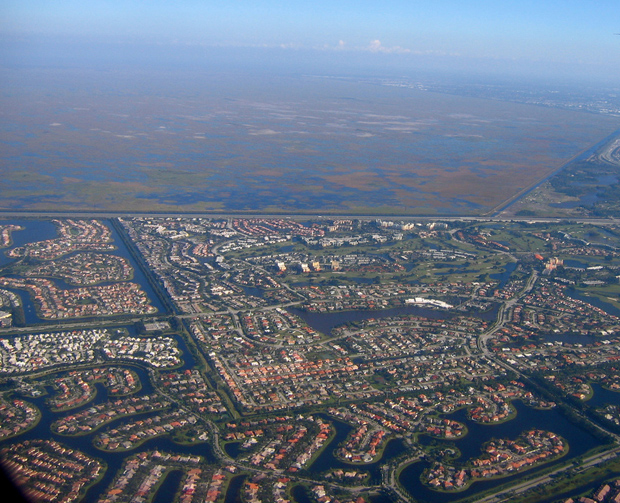
"It's time the federal government stopped encouraging sprawl," Housing and Urban Development (HUD) Secretary Shaun Donovan declared this morning before the [ Congress for the New Urbanism. ]
He'd announced moments before that the department would fund $3 billion worth of projects this year alone, and they'd henceforth use "location efficiency" (based on transportation access, residential density, and so on) to score grant applications. They'll also use the criteria of LEED-ND, the brainchild of CNU, the U.S. Green Building Council, and the National Resources Defense Council, Donovan said. It was launched last month to apply the green principles of LEED to urban development.It could turn out to be the first step in a sea change about how the federal government approaches urbanism, which in turn could lead to the end of sprawl. Or, to paraphrase Nixon, we are all New Urbanists now.
The implications go beyond funding for public housing. Last year, HUD joined the Department of Transportation and the Environmental Protection Agency in creating the Interagency Partnership for Sustainable Communities, an effort to think holistically about housing, transportation, and quality of life when awarding tens of billions of dollars in federal funds.
To see the entire article, use the link below. It is worth a few minutes of your time.
-----------------------------------------
Transportation hubs in larger cities should combine air, rail and bus in one place when possible. When one single hub is not practical, there should be light rail or bus connections between all modes. There must be regulations that assure the best use of all modes. Air is obviously quickest for very long distance travel, but least efficient in fuel consumption, unless we consider lighter than air ships. Rail is the most fuel efficient in almost all travel, and can be fastest in mid distances up to several hundred miles, especially when we consider getting to and from airports.
Buses, while less fuel efficient than rail has the great advantage of flexibility; they can take you from any two points on the highway system. Rail's greater speed and to some extent it's efficiency depends on more widely spaced stops and not having to deal with highway traffic.
Our present system, depending so heavily on the private automobile and air, is the most inefficient of any developed nation on Earth. How can we expect to compete with other countries when transportation is such a large percentage of the cost of doing business??
We must build a nationwide high speed rail system that efficiently connects all modes of travel and freight, from walking, bicycles, buses, and all versions of rail to air and water.
If we get busy on this project, we could save many millions of barrels of oil over the next ten years; and create a million good paying jobs to help our sagging economy.
William McPherson
Saturday, May 22, 2010
RESTORING TRUST
RESTORING TRUST
How can it be done?
Bring back; government of the people, by the people, for the people.
Things the Congress needs to do:
A good start to this goal is in the House and Senate now with 150 cosponsors in the House and 18 cosponsors in the Senate. It is the Fair Elections Now Act – which allows a candidate to collect small donations up to $100 until he is qualified, and then those small donations will be matched 4 to 1 up to a certain amount. If a participating candidate is facing a well-financed or self-financed opponent, they will be able to respond by utilizing this matching fund provision.
This bill is not perfect but it is far better than the broken system we have today. We need to get this bill passed this year.
Break up the too big to exist banks.
Pass effective regulation of all financial institutions.
SUNSHINE:
There are far too many secrets in our present government. Other than military plans and capabilities, there are very few reasons to keep secrets from our citizens. If there are things we are doing that we do not want known; maybe we should not be doing them.
_______________________________________________--
What can you and I do to restore citizens trust in our government?
We must contact our representatives in Congress and remind them who it is, that they represent in a democratic Republic.
We should keep ourselves informed about these and all important issues.
Vote, not for a political party but, for a candidate you can trust.
Support IRV, Instant Runoff Voting, also called Ranked Choice Voting, same system, different characteristics. Some members of the R&D parties do not like it, because it gives Independents and third parties a better chance at winning without huge financing.
It also saves taxpayers the expenses of runoff elections.
William McPherson
Tuesday, April 20, 2010
TRUST GOVERNMENT ??
Only 22% Americans trust our Government.
I was shocked when I first heard this. Who did the polling? There is always a little suspicion in my mind about polls. It was Pew.
As my mind began to wander, I thought, how many of the people in government do I trust? Well most of them I don't know from Adam, and none of them personally, but of those I know well enough to have an opinion, not many would have my complete confidence.
Why do we mistrust? 1. Big money in campaigns 2. Broken promises 3. Extreme polarization, etc. – I think also our expectations were unrealistically high after the election of Barak Obama.
Why do you not trust our Government 100% ?
Subscribe to:
Posts (Atom)
