I only found John Ikerd on the internet a few days ago. He is a gold mine of wisdom. I discovered his writings while researching for an essay on ethics and morality.
John E. Ikerd
Professor Emeritus of Agricultural Economics
University of Missouri Columbia
http://web.missouri.edu/~ikerdj/
I encourage all of you who wish to restore democracy to America to visit his website for further reading.!!
William McPherson
------------------------------------------------------------------------
The Neglect of Democracy
John Ikerd
The 2008 presidential candidates raised and spent more than one billion dollars, about $8.50 per voter in the presidential election. Obviously, each person who voted didn’t contribute $8.50 to support their candidate’s attempts to win the election. Some contributed millions while others contributed nothing. Other than each casting one vote, Americans did not participate equally in determining the outcome of the election or even in deciding which candidates appeared on their ballots.
The most fundamental principle of democracy is that all people are of equal inherent worth and thus have equal inherent rights, including the right to participate in making the rules by which all are governed. The democratic government of the United States was founded upon this principle of equal rights for all. Our government has been exemplary, though less than perfect, in protecting the rights spelled out specifically in our Constitution. However, the inherent right of all people to an equal voice in the political affairs of the nation has been solely neglected.
Throughout American history, the wealthy have had more political influence than the poor. The U.S. Supreme Court confirmed this inequity in 1976 when it affirmed that spending money to influence elections represents “constitutionally protected free speech.” With this decision, the person who can afford $1,000 dollars was granted one-hundred times as much influence over political processes as the person who can only afford to spend $10. Two years later, the Supreme Court affirmed that corporations have a constitutional right to make political contributions, allowing the corporate concentration of economic power to be wielded as political power. In addition, the political power of corporations is not limited to campaign contributions: they lobby our lawmakers, advise our regulators, influence public opinion of political matters, and essentially dictate the economic policies of the United States.
When wealthy individuals support various political causes, they may or may not be motivated by the public good. Corporations, on the other hand, are legally committed to serving the interest of their stockholders, not the good of the public in general. They are not real people and thus have no innate sense of social or ethical responsibility. Corporations are legal entities, created for specific purposes: in the case of for-profit corporations, to maximize economic returns for their investors. Anything they do that serves the public good must be justified to investors as a means of enhancing their wealth. Individuals are capable of pure altruism and patriotism; corporations are not.
Regardless of whether wealth is individual or corporate, the people of the United States in general have been denied their basic democratic right to have an equal voice in making the rules by which all must abide. However, as corporations have come to dominate the U.S. economy, the source of most personal wealth has become corporate wealth. Over time, corporations have replaced wealthy individuals as the dominant source of political as well as economic power. Perhaps most important, corporations now have the political power to block any laws that might limit their political powers. We are losing our democracy in America; we are drifting toward “corpocracy.”
Corpocracy seems an appropriate word for a government that is dominated by corporate power. The word democracy has its roots in the Greek words "demos," meaning common people, and "cracy," meaning rule or strength. Plutocracy comes from "plutos" – rich people – and aristocracy comes from “aristos” – high-class people. "Corp" is a common abbreviation for corporation. Following the pattern of the other Greek words, "corpos" would mean "corporate people" and corpocracy “corporate rule.” Since the U.S. Supreme Court has consistently ruled that corporations are “legal people,” with the same political rights as “real people,” the U.S. government might accurately be called a corpocracy – which rhymes with hypocrisy.
The gradual transformation from democracy to corpocracy is not so much a matter of intent or design as public neglect. Democracies require constant attention from the people, particularly when coupled with capitalist economies. The capitalist is always motivated by economic value – profit and growth. Economic value accrues to individuals, not to society as a whole. Thus, anything done solely for the benefit of others – or for society in general – is of no economic value. For-profit corporations are pure capitalists. Certainly corporate investments and employment create benefits for society as well as individuals, but societal good is not their motivation.
Anytime the government collects taxes for purely public purposes, the economic opportunities of corporations are diminished. Corporate taxes reduce dollars for dividends or investments and investors could have spent their dividends or capital gains to stimulate the economy. Government restrains on corporate exploitation of natural resources or workers are seen as wasteful government interference. Anything that ensures the economic rights for all people to adequate food, shelter, and healthcare are opposed as being socialistic.
The primary responsibility of government is to do those things that are necessary for the benefit of society in general, but for which there is no economic incentive – meaning things that have no economic value. As a result, the most important things governments do for the common good of real people are invariably opposed by “corporate people.” In a pure corpocracy, the only legitimate function of government would be to ensure the individual’s right to private property – meaning the right to acquire and accumulate individual wealth.
The Constitution is our only defense against the rising power of corpocracy in America. The only sure way to roll back more than one-hundred years of Supreme Court rulings is to amend the Constitution. The U.S. Constitution was designed to be amended from time to time – to be a living document. Thomas Jefferson wrote, “As [the human mind] becomes more developed, more enlightened, as new discoveries are made, new truths discovered and manners and opinions change, with the change of circumstances, institutions must advance also to keep pace with the times.” The erosion of the American democracy has been too long neglected. It’s time to reclaim our democracy from corpocracy, before it’s too late.
Tuesday, June 22, 2010


Monday, June 7, 2010
BUILDING an EFFICIENT NATIONAL TRANSPORTATION SYSTEM
Building an Efficient National
Transportation System
[ This is not a new subject with me. There are two related essays in the environmental essays section of this web site. COMMUNITIES WITHOUT CARS and -TRANSPORTATION and WORLD TRADE were written in 1997.]
With oil gushing from the mile deep Gulf of Mexico, now seems like a good time to think seriously about conserving energy.
Let us begin at home. The two most efficient modes of transportation are bicycles and walking. The average able bodied adult can walk a half mile in about ten minutes, or ride a bike in less than half that time. With bus stops spaced one mile apart, no one would be more than a ten minute walk from public transportation. Additional benefits of this level of transportation will be a great reduction in obesity, diabetes and heart disease.
The next step in a transportation system is a hub where local and regional modes of transit can connect. I will briefly describe a small and mid size city hub with which, I am somewhat familiar.
Port Angeles, Washington has a population of about 20,000, people. Clallam Transit is the primary tenant of The Port Angeles Gateway Transit Center. They serve Port Angeles, Sequim, Forks, Neah Bay and a few smaller communities in between. Dungeness Line provides connection to Seattle, and from there to the world. Just across the street from the hub is a ferry terminal to Victoria, Canada. Five miles from the terminal is Fairchild Airport which also connects to Seattle.
Everett, WA has a population of about 100,000. Their hub is described below from their own website. It connects buses from four counties, commuter rail and Amtrak.
 verett Station serves as a transportation hub as well as a higher education and career development center. The Everett Station is open 6 a.m. to 10 p.m. daily, including holidays.
 Everett Station is home to the Everett Transit Customer Service Center as well as WorkSource, WorkForce, The University Center and Espresso Americano. Amtrak, Greyhound, Northwest Trailways, Skagit Transit, Island Transit, Sound Transit and Community Transit also provide service from Everett Station.
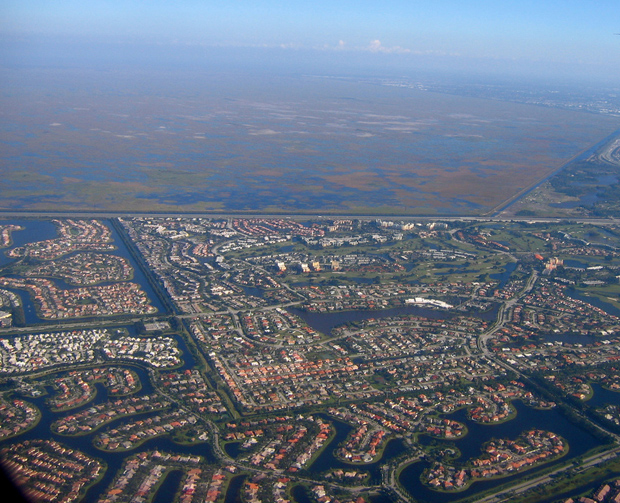
Before we go on to major cities, railroads and airports; let me mention that the biggest impediment to efficiency in public transportation is urban sprawl. I have long known this fact, but only today, I found a little good news happening in our government.

"It's time the federal government stopped encouraging sprawl," Housing and Urban Development (HUD) Secretary Shaun Donovan declared this morning before the [ Congress for the New Urbanism. ]
He'd announced moments before that the department would fund $3 billion worth of projects this year alone, and they'd henceforth use "location efficiency" (based on transportation access, residential density, and so on) to score grant applications. They'll also use the criteria of LEED-ND, the brainchild of CNU, the U.S. Green Building Council, and the National Resources Defense Council, Donovan said. It was launched last month to apply the green principles of LEED to urban development.It could turn out to be the first step in a sea change about how the federal government approaches urbanism, which in turn could lead to the end of sprawl. Or, to paraphrase Nixon, we are all New Urbanists now.
The implications go beyond funding for public housing. Last year, HUD joined the Department of Transportation and the Environmental Protection Agency in creating the Interagency Partnership for Sustainable Communities, an effort to think holistically about housing, transportation, and quality of life when awarding tens of billions of dollars in federal funds.
To see the entire article, use the link below. It is worth a few minutes of your time.
-----------------------------------------
Transportation hubs in larger cities should combine air, rail and bus in one place when possible. When one single hub is not practical, there should be light rail or bus connections between all modes. There must be regulations that assure the best use of all modes. Air is obviously quickest for very long distance travel, but least efficient in fuel consumption, unless we consider lighter than air ships. Rail is the most fuel efficient in almost all travel, and can be fastest in mid distances up to several hundred miles, especially when we consider getting to and from airports.
Buses, while less fuel efficient than rail has the great advantage of flexibility; they can take you from any two points on the highway system. Rail's greater speed and to some extent it's efficiency depends on more widely spaced stops and not having to deal with highway traffic.
Our present system, depending so heavily on the private automobile and air, is the most inefficient of any developed nation on Earth. How can we expect to compete with other countries when transportation is such a large percentage of the cost of doing business??
We must build a nationwide high speed rail system that efficiently connects all modes of travel and freight, from walking, bicycles, buses, and all versions of rail to air and water.
If we get busy on this project, we could save many millions of barrels of oil over the next ten years; and create a million good paying jobs to help our sagging economy.
William McPherson
Subscribe to:
Posts (Atom)
